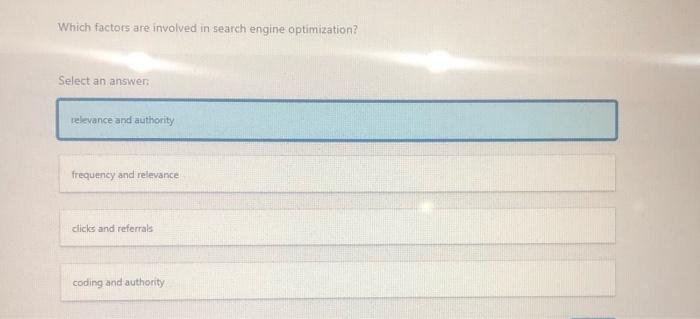
Search engine optimization involves on-page factors like content and keywords, as well as off-page factors like backlinks and domain authority. It is crucial for boosting a website’s visibility and ranking in search engine results.
Implementing effective SEO strategies can lead to increased organic traffic and improved online presence. By optimizing these factors, businesses can enhance their digital marketing efforts and reach a wider audience. This comprehensive approach to SEO encompasses various elements, all working together to improve a website’s performance in search results.
Understanding and addressing these factors is essential for achieving success in the competitive online landscape.
Keyword Research
Keyword research is a crucial aspect of search engine optimization (SEO). It involves identifying the specific words and phrases that people use when searching for information, products, or services online. Effective keyword research helps to optimize website content for better visibility in search engine results.
Identifying Target Keywords
Identifying the right keywords for your website involves understanding the intent behind the search queries of your target audience. By putting yourself in the shoes of your potential visitors, you can determine which keywords are most relevant to your content and likely to drive valuable traffic.
Tools For Keyword Analysis
Several tools are available to assist in keyword analysis, helping you identify relevant keywords and assess their potential impact. These tools include Google Keyword Planner, SEMrush, Ahrefs, and Moz Keyword Explorer. They provide valuable insights into search volume, competition, and related keywords, aiding in the selection of the most effective keywords for your SEO strategy.
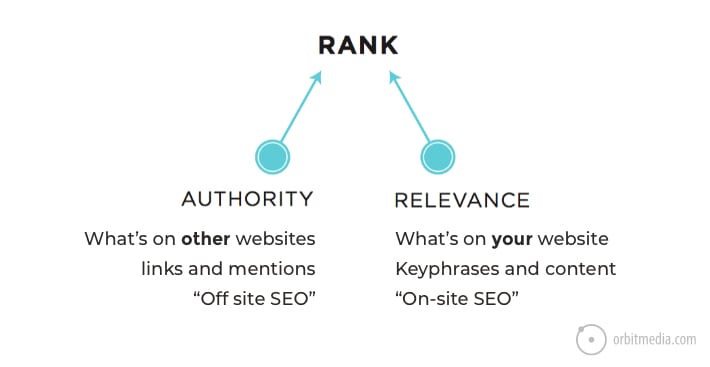
Credit: www.orbitmedia.com
On-page Seo Elements
On-page SEO involves optimizing the individual web pages to improve their search engine rankings and attract more organic traffic. It includes various factors that webmasters can control directly on their websites, contributing to better visibility and relevance in search results. The critical on-page SEO elements encompass optimizing meta tags and descriptions, content quality and keyword usage, and site structure and internal linking.
Optimizing Meta Tags And Descriptions
Meta tags and descriptions play a crucial role in on-page SEO. They provide search engines with information about the content of a web page. By including relevant keywords and crafting compelling descriptions, webmasters can enhance the visibility and click-through rates of their pages in search results.
Content Quality And Keyword Usage
High-quality content is fundamental to on-page SEO. It should be relevant, valuable, and engaging for the target audience. Proper keyword research and strategic usage within the content can improve its visibility and align it with user search intent.
Site Structure And Internal Linking
The structure of a website and its internal linking are vital for on-page SEO. A well-organized site structure and effective internal linking help search engines understand the content and hierarchy of a website, leading to better indexing and ranking of its pages.
Technical Seo Considerations
When it comes to search engine optimization (SEO), there are various factors to consider. One crucial aspect that often gets overlooked is the technical side of SEO. These technical considerations play a significant role in improving your website’s visibility and ranking on search engine result pages (SERPs). In this article, we will explore three key technical SEO considerations: Site Speed and Performance, Mobile Optimization, and Secure Sockets Layer (SSL) and HTTPS.
Site Speed And Performance
Site speed and performance are critical factors for both search engines and users. A slow-loading website can lead to a higher bounce rate and lower user engagement, which negatively impacts your SEO efforts. To optimize your site speed, ensure that you have a reliable hosting provider and minimize the use of large media files. Compressing images, enabling browser caching, and using content delivery networks (CDNs) can also significantly improve your website’s performance.
Mobile Optimization
In today’s mobile-centric world, having a mobile-friendly website is no longer an option; it’s a necessity. With the increasing number of users accessing the internet through mobile devices, search engines prioritize mobile-friendly websites in their rankings. To optimize your website for mobile, use a responsive design that adjusts seamlessly to different screen sizes. Optimize images and videos for mobile devices, and ensure that your site’s navigation is user-friendly and intuitive on mobile platforms.
Secure Sockets Layer (ssl) And Https
Ensuring the security of your website is crucial not only for protecting user data but also for SEO purposes. Search engines prioritize secure websites that use SSL certificates and HTTPS encryption. To implement SSL and HTTPS, obtain an SSL certificate from a trusted certificate authority and configure your website to use HTTPS. This provides a secure connection between your website and its visitors, boosting trust and credibility in the eyes of search engines and users.
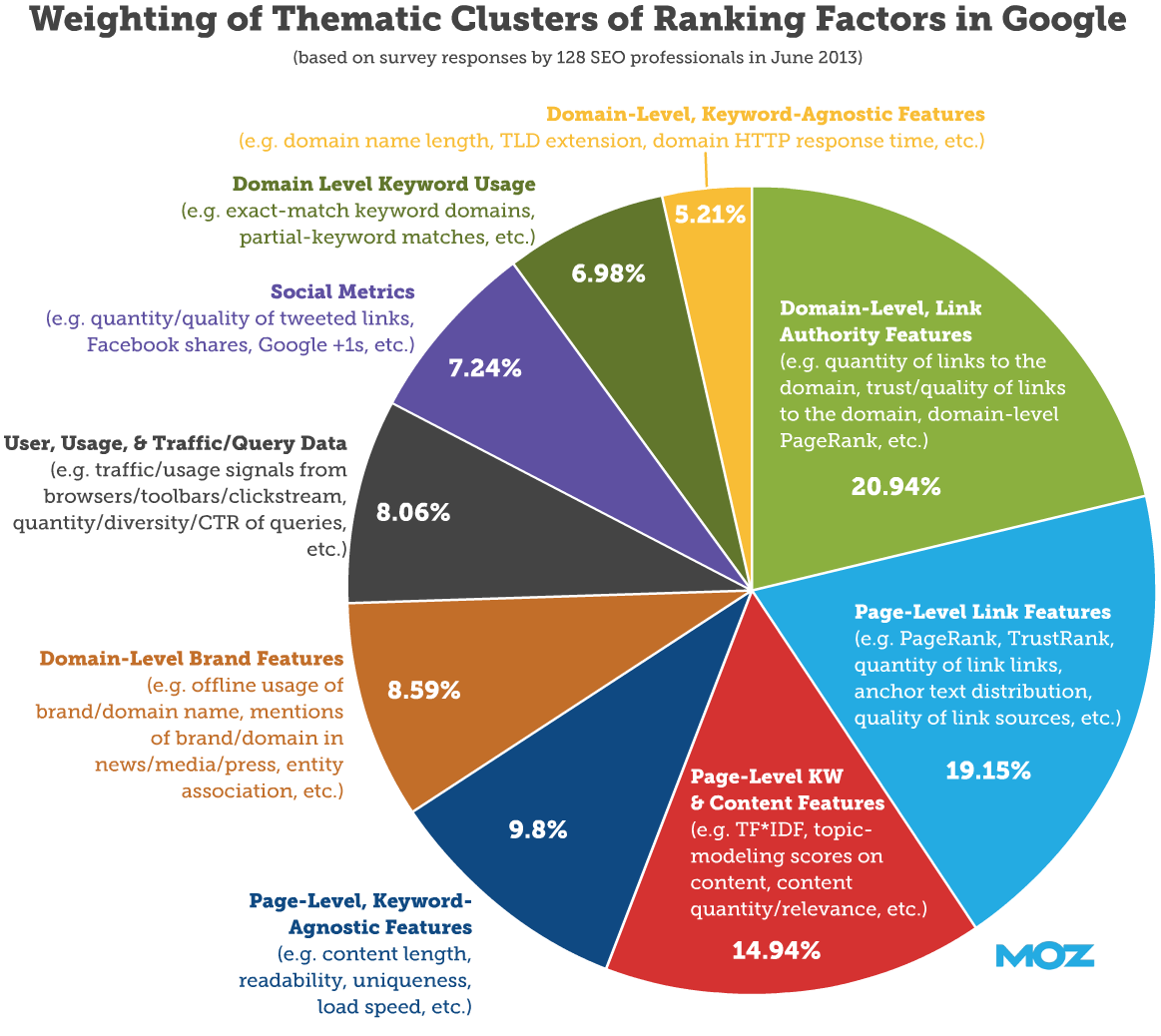
Credit: medium.com
Off-page Seo Strategies
Off-Page SEO strategies are essential for improving your website’s visibility and ranking on search engine result pages. These strategies involve optimizing factors that occur outside of your website, such as building quality backlinks, leveraging social media influence, and utilizing guest blogging and content syndication. Let’s explore each of these strategies in more detail:
Building Quality Backlinks
Backlinks are an important off-page SEO factor that can significantly impact your website’s ranking. When other websites link to your site, search engines see it as a vote of confidence, indicating that your content is valuable and trustworthy. However, not all backlinks are created equal. It’s crucial to focus on building high-quality backlinks from reputable and relevant websites.
Here are some effective strategies to build quality backlinks:
- Create valuable and shareable content that naturally attracts backlinks from other websites.
- Reach out to relevant websites and offer to contribute guest posts or provide valuable content for their audience.
- Participate in industry forums and discussions, including a link to your website in your profile or signature.
- Collaborate with influencers or industry experts to create content and earn backlinks from their network.
Social Media Influence
Social media platforms have become an integral part of our daily lives, and they also play a significant role in off-page SEO. By leveraging social media influence, you can increase your website’s visibility, drive traffic, and engage with your target audience.
Here’s how you can harness the power of social media for off-page SEO:
- Share your website’s content on various social media platforms to increase its reach and encourage others to share it.
- Engage with your audience by responding to comments, messages, and mentions to build a strong online presence.
- Collaborate with influencers or industry leaders to promote your content and gain exposure to their followers.
- Join relevant social media groups and communities to share your expertise and connect with like-minded individuals.
Guest Blogging And Content Syndication
Guest blogging and content syndication are effective off-page SEO strategies that can help you expand your reach, build brand authority, and earn valuable backlinks.
Consider the following approaches for guest blogging and content syndication:
- Identify reputable websites or blogs in your industry and offer to contribute high-quality guest posts.
- Ensure that your guest posts provide valuable and unique content that aligns with the target website’s audience.
- Include relevant links back to your website within the guest post to drive traffic and improve your backlink profile.
- Explore content syndication platforms to republish your content on other websites, reaching a wider audience and increasing your chances of acquiring backlinks.
Local Seo Tactics
When it comes to SEO, local tactics play a crucial role in optimizing your website for search engines. Optimizing for local search requires a different approach than traditional SEO tactics.
Optimizing For Local Search
Optimizing your website for local search involves a few key factors that help improve your online visibility. One of the most important factors is ensuring your website has accurate and consistent information about your business’s name, address, and phone number (NAP) across all directories and online listings.
Additionally, optimizing for local search requires incorporating relevant keywords that are specific to your location and industry. This helps search engines understand the content of your website and its relevance to local users.
The Importance Of Google My Business
Google My Business is a free tool that allows businesses to manage their online presence across Google’s various platforms, including search results and Google Maps. It’s important to claim and verify your Google My Business listing to ensure accurate information is displayed when users search for your business.
Optimizing your Google My Business listing involves providing accurate information about your business, including your address, phone number, website, and hours of operation. You can also add photos and respond to customer reviews, which can help improve your local search rankings.
In conclusion, optimizing for local search requires a specific set of tactics that help improve your online visibility for local users. By incorporating accurate NAP information and relevant keywords, and optimizing your Google My Business listing, you can improve your local search rankings and attract more local customers to your business.
Credit: searchengineland.com
Content Is King
When it comes to Search Engine Optimization (SEO), there are several factors that can impact the ranking of a website on search engine result pages (SERPs). Content is one of the most important factors that can significantly affect the SEO of a website. In this article, we will focus on the subheading of ‘Content is King’, and explore the impact of valuable and shareable content as well as multimedia on SEO.
Creating Valuable And Shareable Content
Creating valuable and shareable content is essential for SEO. Search engines aim to provide the best user experience, and valuable content is a crucial factor in achieving that goal. Valuable content is informative, relevant, and engaging, and it provides a solution to the user’s query.
Shareable content is another essential factor in SEO. When users share content, it creates backlinks to a website, which is a crucial factor in SEO. Backlinks are an indication of the credibility and authority of a website, which search engines take into account when ranking websites.
The Impact Of Multimedia On Seo
Multimedia content such as images, videos, infographics, and podcasts can significantly impact SEO. Multimedia content can make a website more engaging and improve the user experience. Search engines take into account the user experience when ranking websites, and multimedia content can enhance the user experience by making the content more visually appealing and easier to understand.
Additionally, multimedia content can provide an opportunity for backlinks. For instance, if a website embeds a video from YouTube, it creates a backlink to the YouTube video, which can increase the authority of the YouTube channel and improve the ranking of the video on YouTube.
| Multimedia Type | Impact on SEO |
|---|---|
| Images | Improves user experience, creates an opportunity for backlinks |
| Videos | Improves user experience, creates an opportunity for backlinks |
| Infographics | Improves user experience, creates an opportunity for backlinks |
| Podcasts | Improves user experience, creates an opportunity for backlinks |
Tracking Seo Progress
Tracking the progress of your SEO efforts is crucial to ensure that your website is continuously improving its visibility and rankings on search engine results pages (SERPs). By monitoring key performance indicators (KPIs) and utilizing analytics, you can gain valuable insights into the effectiveness of your SEO strategies and make informed decisions to drive further optimization.
Key Performance Indicators (kpis)
KPIs are measurable metrics that help you gauge the success of your SEO campaigns. By tracking these indicators, you can identify areas that require improvement and measure the impact of your optimization efforts. Some essential KPIs to consider include:
- Organic Traffic: The number of visitors coming to your website through organic search results.
- Keyword Rankings: The positions of your target keywords on SERPs.
- Conversion Rate: The percentage of visitors who complete a desired action, such as making a purchase or filling out a form.
- Bounce Rate: The percentage of visitors who leave your site after viewing only one page.
- Page Load Speed: The time it takes for your web pages to load.
- Backlink Profile: The quality and quantity of websites linking to your site.
Utilizing Analytics For Seo Improvement
Analytics tools provide valuable data that can help you refine your SEO strategies and achieve better results. By analyzing this data, you can identify areas for improvement and make data-driven decisions. Some popular analytics tools include Google Analytics, Moz, and SEMrush. Here are a few ways to utilize analytics for SEO improvement:
- Identify Top Performing Pages: Analyze which pages on your website attract the most organic traffic and have high conversion rates. Optimize these pages further to maximize their impact.
- Track Keyword Performance: Monitor how your target keywords are performing in terms of rankings and click-through rates (CTRs). Adjust your optimization strategies based on this data.
- Monitor User Behavior: Analyze user engagement metrics like time on site, bounce rate, and exit pages. Identify patterns and optimize your website’s user experience accordingly.
- Examine Referral Traffic: Determine which external websites are driving the most traffic to your site. Focus on building relationships with these sources and acquiring more quality backlinks.
- Set Up Custom Alerts: Utilize the alert features in your analytics tool to receive notifications for significant changes in your website’s performance. This allows you to promptly address any issues or capitalize on positive trends.
By regularly tracking your SEO progress and leveraging analytics, you can refine your strategies, improve your website’s performance, and ultimately achieve higher rankings and increased organic traffic.
The Future Of Seo
As technology continues to evolve, so does the field of search engine optimization (SEO). In order to stay ahead of the curve, it’s important to understand the factors that will shape the future of SEO. In this blog post, we will explore two key areas that are expected to have a significant impact on SEO in the coming years: Voice Search Optimization and Artificial Intelligence (AI) and Machine Learning. Let’s dive in!
Voice Search Optimization
With the rise of virtual assistants like Siri, Alexa, and Google Assistant, voice search has become increasingly popular. People are now using their voice to search for information instead of typing keywords into a search engine. This shift in user behavior has led to the need for voice search optimization.
When optimizing for voice search, it’s crucial to focus on long-tail keywords and natural language. Voice queries tend to be more conversational, so incorporating phrases that mimic how people speak can help improve your website’s visibility in voice search results. Additionally, ensuring your website is mobile-friendly and loads quickly is essential, as most voice searches are performed on mobile devices.
Artificial Intelligence And Machine Learning
Artificial Intelligence (AI) and Machine Learning (ML) are revolutionizing the way search engines analyze and rank websites. Search engines are becoming smarter at understanding user intent and delivering relevant search results.
AI and ML algorithms are constantly evolving to provide more accurate search results based on various factors, such as user behavior, location, and search history. This means that SEO strategies need to adapt to these changes by focusing on creating high-quality, user-friendly content that aligns with search engine algorithms.
Furthermore, AI-powered chatbots and virtual assistants are becoming more prevalent in customer service and support. Incorporating AI and ML technologies into your SEO strategy can help improve user experience and engagement on your website.
In conclusion, the future of SEO lies in adapting to emerging technologies and user behaviors. Voice search optimization and leveraging AI and ML technologies are crucial for staying ahead in the ever-evolving world of SEO.
Frequently Asked Questions
Which Factors Are Involved In Search Engine Optimization Select An Answer?
Search engine optimization involves factors such as keywords, content quality, backlinks, user experience, and mobile-friendliness. These elements help websites rank higher in search results.
What Are The Factors Of Seo?
The factors of SEO include keyword research, on-page optimization, quality content, backlinks, and user experience. Each plays a crucial role in improving a website’s search engine ranking and visibility.
Which Factors Are Involved In Search Engine Optimization Brainly?
Search engine optimization (SEO) involves several factors, such as keywords, quality content, website structure, backlinks, and user experience. These elements help search engines understand and rank your website, leading to increased visibility and organic traffic.
What Determines Search Engine Optimization?
Search engine optimization is determined by various factors such as website content, keywords, backlinks, website structure, and user experience. These elements help search engines to understand the relevance and authority of a website, which ultimately determines its ranking on search engine result pages.
Conclusion
Effective search engine optimization requires a combination of on-page and off-page factors. On-page factors such as keyword research, optimized content, and user experience are crucial for ensuring a website is easily crawled and ranked by search engines. Meanwhile, off-page factors such as backlinks and social media presence help to establish a website’s authority and credibility.
By prioritizing these factors and regularly monitoring and adjusting strategies, businesses can improve their search engine rankings and attract more organic traffic to their site.